

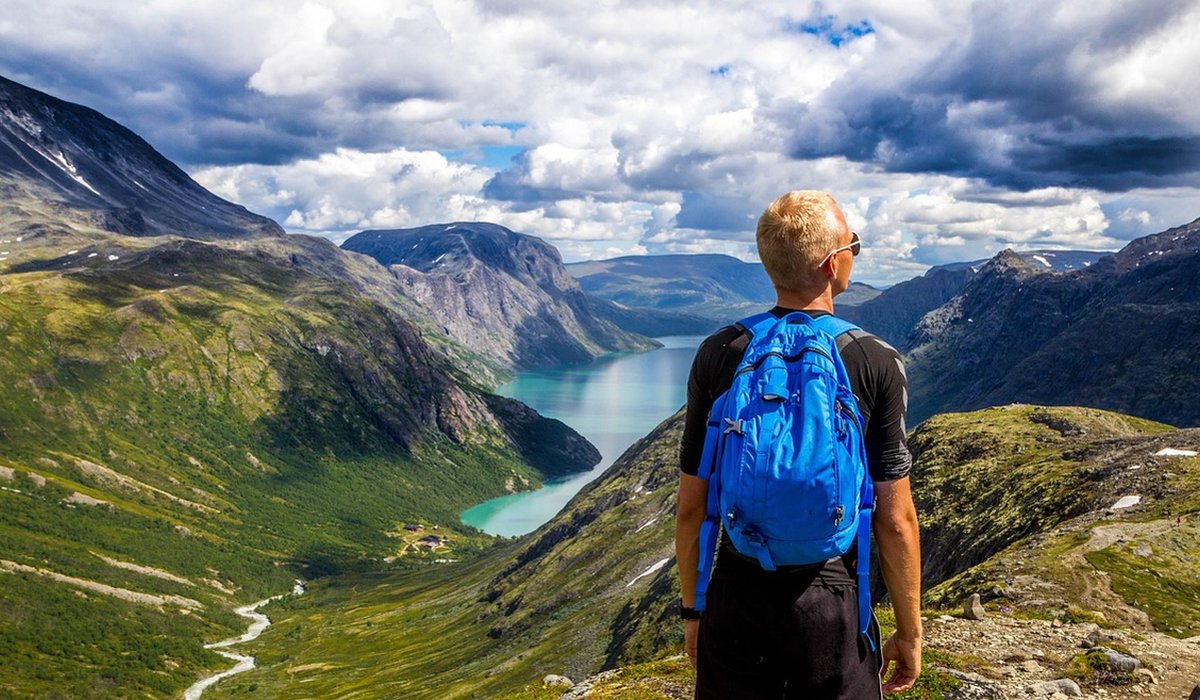
Malham sits at the head of a shallow valley in the southern Dales, a cluster of stone houses, a couple of pubs and a beck that runs clear over limestone. What makes it such a satisfying base is that the drama starts almost immediately. Within twenty minutes of leaving the village you can be standing beneath Malham Cove, a curved limestone amphitheatre around eighty metres high, with a dry waterfall above it that has not flowed for thousands of years. The walking here is rarely brutal in terms of distance, but it is steady, stony and exposed in places, and it rewards a bit of planning.
The Short Circuit: Village to the Cove
For a first visit, or a half-day outing, the classic out-and-back to the Cove is hard to beat. From the village centre, follow the lane north past the old barns and pick up the signed footpath on your right. The route crosses a couple of fields, passes through a wicket gate and then climbs gently beside the beck. In dry weather this is easy going; after heavy rain the limestone underfoot turns slick, so take the grassy edges where you can.
At the Cove itself, the shape of the place does the talking. The cliff curves around like a shell, and peregrines sometimes wheel above the lip in spring. To reach the top, take the stepped path to the left of the cliff face — roughly four hundred steps, uneven and steep in places, with a handrail in the trickier sections. Above, the limestone pavement opens out in those familiar clints and grykes, split by deep fissures. Watch your footing here; a twisted ankle on the pavement is the most common mishap on this hill. Return the same way, or drop down the grassy path on the western side to make a small loop back to the village.
The Full Circuit: Janet's Foss, Gordale and the Tarn
If you have a full day and decent legs, the longer circuit is the one to do. Head east out of the village towards Janet's Foss, a small wooded waterfall and plunge pool about a mile away, then continue north-east to Gordale Scar. The scar is a dramatic limestone gorge with a waterfall tumbling through a narrow cleft, and it is worth lingering.
From Gordale, climb the path up the right-hand side of the gorge rather than attempting the waterfall scramble unless you are confident on wet rock. Above, the ground opens into rough pasture, and you can contour north-west to reach Malham Tarn, a rare example of a natural lake on limestone. From the tarn, follow the path west into Watlowes, the dry valley that funnels you gently downhill back towards the Cove. It is a wonderful stretch of walking: high drystone walls, a flat limestone floor, and the cliff edge appearing ahead of you. Drop down through the pavement and return to the village.
Allow roughly four to five hours for the full circuit, covering around seven to eight miles with perhaps three hundred metres of ascent.
Refreshment Stops
Malham is well served for its size, and you will not go hungry.
- The village pubs serve generous pub food and local ale, and both get busy at lunchtime in summer — book ahead or eat early.
- The tea rooms and cafés in the village are ideal for a pot of tea and a slice of cake after the steps.
- Pack a lunch if you are doing the full circuit; seating at the tarn is limited but the walls and grassy banks make fine perches.
- Water — refill bottles in the village before setting off, as there is nothing reliable on the high ground.
Practical Advice
This is limestone country, and it behaves differently from the gritstone moors further north. The rock is abrasive when dry and greasy when wet, so footwear matters more than you might expect.
- Boots with decent tread — trail shoes are fine in a dry spell, but the pavement and the stepped path punish thin soles.
- Waterproof jacket and trousers, even on a promising forecast; the valley can turn squally without much warning.
- A paper map and compass — phone signal is patchy in the valleys and non-existent on parts of the high ground.
- Dogs should be kept under close control around livestock, and on a lead near ground-nesting birds between March and July.
- Parking fills up fast on sunny weekends and bank holidays; arrive before ten if you want an easy space.
Take care on the limestone pavement in particular: the grykes are deep enough to swallow a leg, and the surface is fractured in ways that are not always obvious from a distance. Stick to the worn paths across the top rather than cutting across the blocks.
Timing, Seasons and a Final Word
Late spring and early autumn are the sweet spots: the light is long, the ground is usually firm, and the crowds are thinner than in high summer. Midsummer brings the best weather but also the busiest paths, especially between eleven and three. Winter walking here is genuinely rewarding when the Cove catches frost, but daylight is short and the steps can ice up, so start early and carry a torch.
Give yourself more time than the distances suggest. This is a landscape for stopping — to look back down the dry valley, to watch the jackdaws on the cliff, to sit on a wall with a flask. Walk it steadily, respect the limestone, and Malham will give you one of the finest short days out in the Dales.


Coding is used in almost all aspects of life and work now, be it directly or indirectly. It’s not just for companies in the tech sector. “An increasing number of businesses rely on computer code,
Coding is used in almost all aspects of life and work now, be it directly or indirectly. It’s not just for companies in the tech sector. “An increasing number of businesses rely on computer code,
Coding is used in almost all aspects of life and work now, be it directly or indirectly. It’s not just for companies in the tech sector. “An increasing number of businesses rely on computer code,