

Why a Valley Forecast Tells You So Little
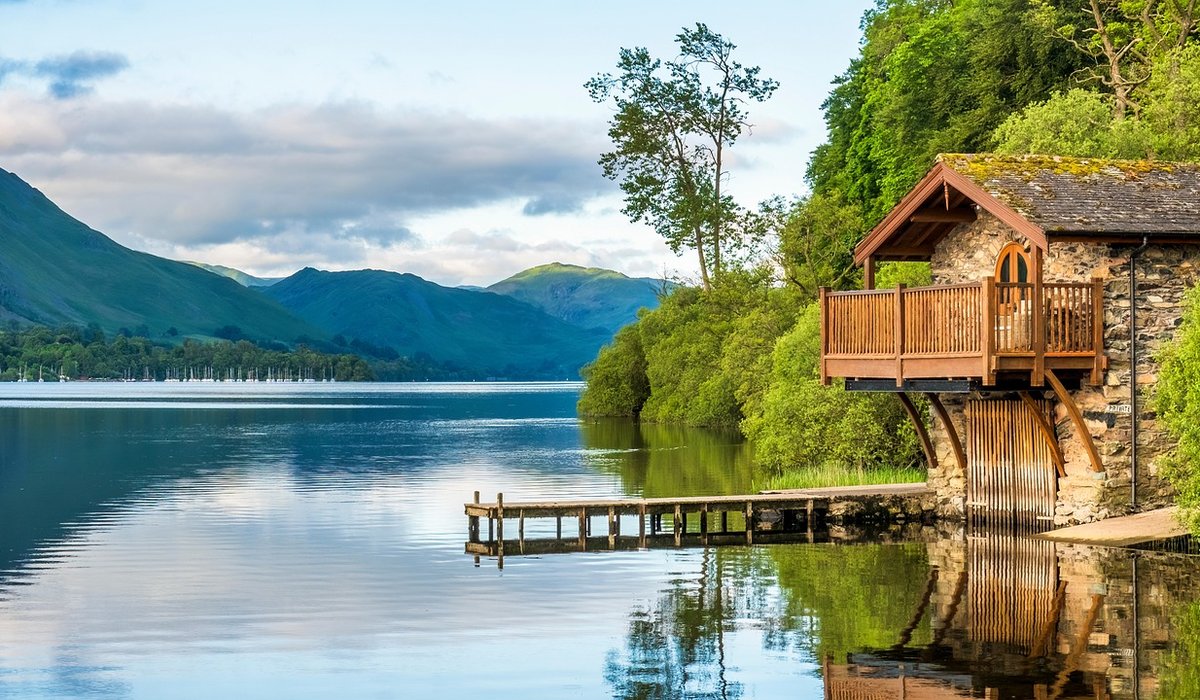
Stand in Ambleside on a calm, bright morning and it is easy to believe the day ahead will be gentle. The lake is glassy, the fells look benign, and the weather app agrees with the view from the car park. An hour later you can be leaning into a wind that snatches at your hood on a summit 900 metres above the valley floor.
That gap exists because the Lake District manufactures a great deal of its own weather. Moist air arrives from the Irish Sea, hits the western fells, and is forced upwards. As it rises it cools, the moisture condenses, and rain falls — often heavily. Borrowdale and the western valleys catch well over 2,000 mm of rain a year, and a few spots exceed 3,000 mm, making them among the wettest inhabited places in England. Travel just a dozen miles east of the divide and the annual total can halve.
Temperature behaves the same way. Air cools at roughly 1°C for every 150 metres of ascent, so a valley at 80 metres and a summit at 950 metres can differ by five or six degrees before you factor in wind. Add a stiff breeze and the effective temperature on top can be a full ten degrees below what you left behind in the car park.
Reading the Forecast Properly
A general regional forecast is a starting point, not a plan. What matters is the picture at the height you intend to reach. Before you leave the house, work through this:
- Summit conditions, not valley conditions. Look for a mountain-specific forecast that gives figures for 600 m, 900 m and above.
- Wind speed and gust speed. Gusts are frequently 40–50 per cent higher than the average, and it is the gusts that knock you off balance.
- Freezing level. This tells you where rain turns to sleet or snow, and where ice will form on rock.
- Timing of change. A front arriving at 2pm is very different from one arriving at 10am, especially in winter when daylight is short.
- Cloud base. A forecast base of 600 metres means most summits will be in cloud and navigation will be by map and compass.
Wind: The Factor That Sends Most People Home
Walkers tend to over-worry about rain and under-worry about wind. Rain makes you wet; wind makes you cold, exhausted and unstable. As a rough guide, 30 mph is noticeable but manageable on open ground. At 40–50 mph you are being pushed around, conversation is difficult, and progress on steep ground slows dramatically. Above 60 mph you cannot walk reliably in a straight line, and exposed ridges and edges become genuinely dangerous.
This matters most on the classic sharp ground: Sharp Edge on Blencathra, Swirral and Striding Edge on Helvellyn, and the rocky crest of Great Gable by the Climber's Traverse. These are committing places where a gust can take your balance at the worst possible moment. If the summit wind forecast is above 40 mph, choose a lower, rounder hill — there are hundreds of good ones — and save the edges for another day.
Cloud, Visibility and the Ground Underfoot
Cloud base is the quiet variable that catches people out. On a clear day the fells feel generous; in cloud, at 700 metres, with a compass and a bearing, the same ground feels entirely different. Practise pacing on a known stretch of path so you can estimate distance when you cannot see. Carry a paper map and a compass even if you use a phone — cold weather drains batteries fast and screens become unresponsive in the wet.
Beneath your boots, conditions shift too. Borrowdale volcanic rock is superb when dry and greasy when wet. Skiddaw slate is slick in the rain. Wet grass on steep fellside is one of the most slippery surfaces in Britain, and loose scree moves underfoot on descents. Add a dusting of snow or a film of verglas and a straightforward grade 1 scramble becomes a winter proposition requiring an axe and crampons.
Seasons and What They Do to the Fells
Spring brings long days but lingering snow patches in north-facing gullies, often well into May. Summer offers the best conditions for long ridge days, though afternoon thunderstorms build quickly over the higher tops and exposed ridges are no place to be when lightning starts. Autumn is arguably the finest season — cooler, clearer, quieter — but the first proper gales arrive with it.
Winter is the most demanding. Daylight in mid-December can be as little as seven and a half hours, and much of that is dim. Ice axe, crampons and the skill to use them are essential on any ground above the snow line, and short days mean a 6am start is often sensible rather than ambitious.
Adapting Your Plan as the Day Unfolds
The best fell walkers are not the ones who push on regardless; they are the ones who change their minds early and without drama. Set a turnaround time before you set off, not a turnaround point, and stick to it. Identify at least one easier alternative route from your start point so you are never choosing between the original plan and going home.
Tell someone where you are going and when you expect to be back, and check in when you return. Carry a spare layer, a hat and gloves, food you actually want to eat, and a head torch with fresh batteries. Then keep something in reserve — the last hour of any day out should feel like the easiest, not the hardest. Do that and you will enjoy far more of the Lake District, whatever the sky decides to do.


Coding is used in almost all aspects of life and work now, be it directly or indirectly. It’s not just for companies in the tech sector. “An increasing number of businesses rely on computer code,
Coding is used in almost all aspects of life and work now, be it directly or indirectly. It’s not just for companies in the tech sector. “An increasing number of businesses rely on computer code,
Coding is used in almost all aspects of life and work now, be it directly or indirectly. It’s not just for companies in the tech sector. “An increasing number of businesses rely on computer code,